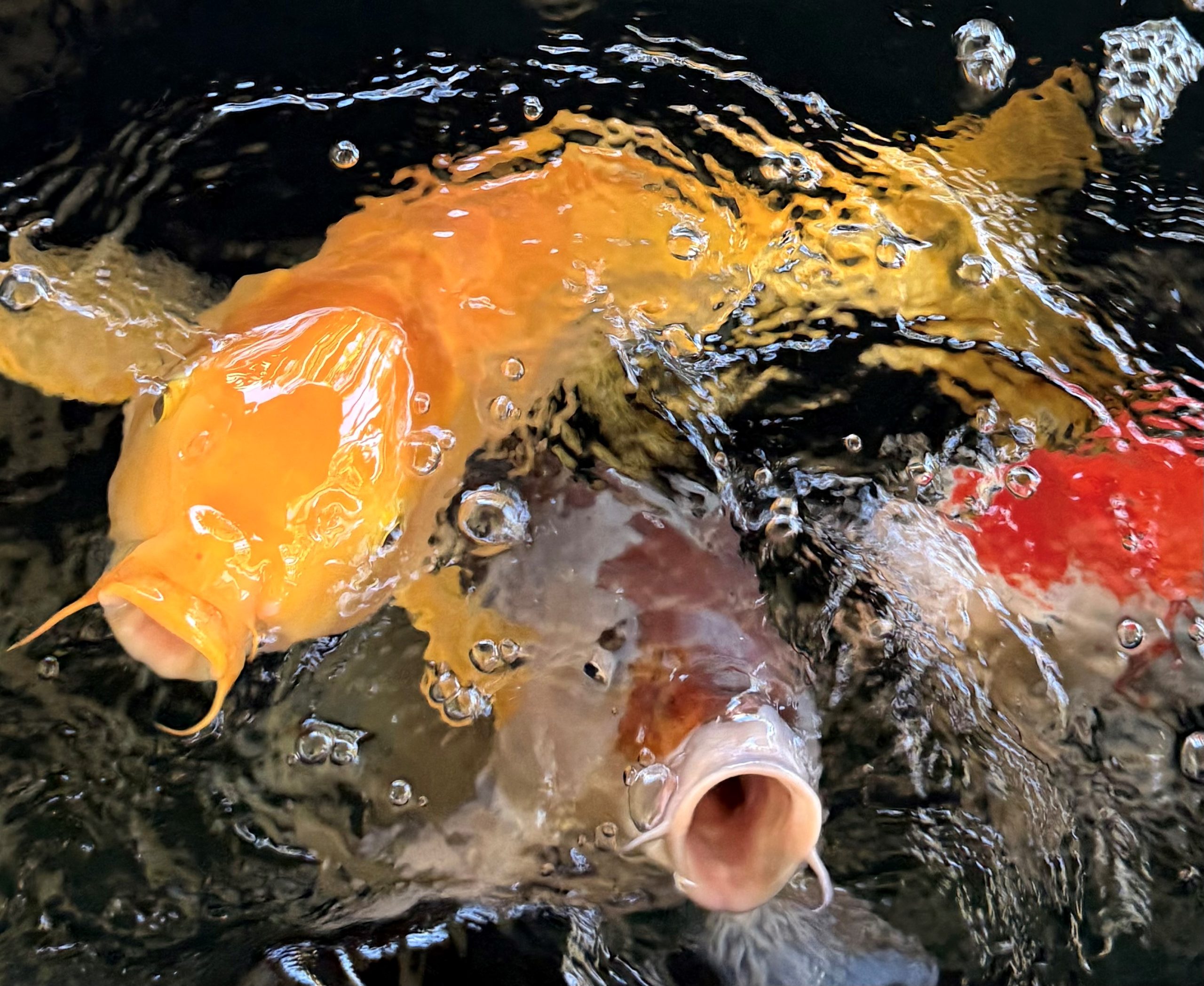
Winter is never just “OMG, it’s freezing out!!” Winter always has its warm days, too. Those days, you will see fish coming to the surface, seeming to be looking for a hand-out. What will you do? I tried that one winter, feeding a few pellets of the Cold Weather Food. No fish died that year. Yes, they have algae to sustain them. But, I figured, I would try it on my own fish and see if the “no feeding below 50°F” rule was scientific or simply a passed-down old wives’ tale. No, I did not check the water temperature when I fed them. So, I proved nothing. When in doubt, do nothing.
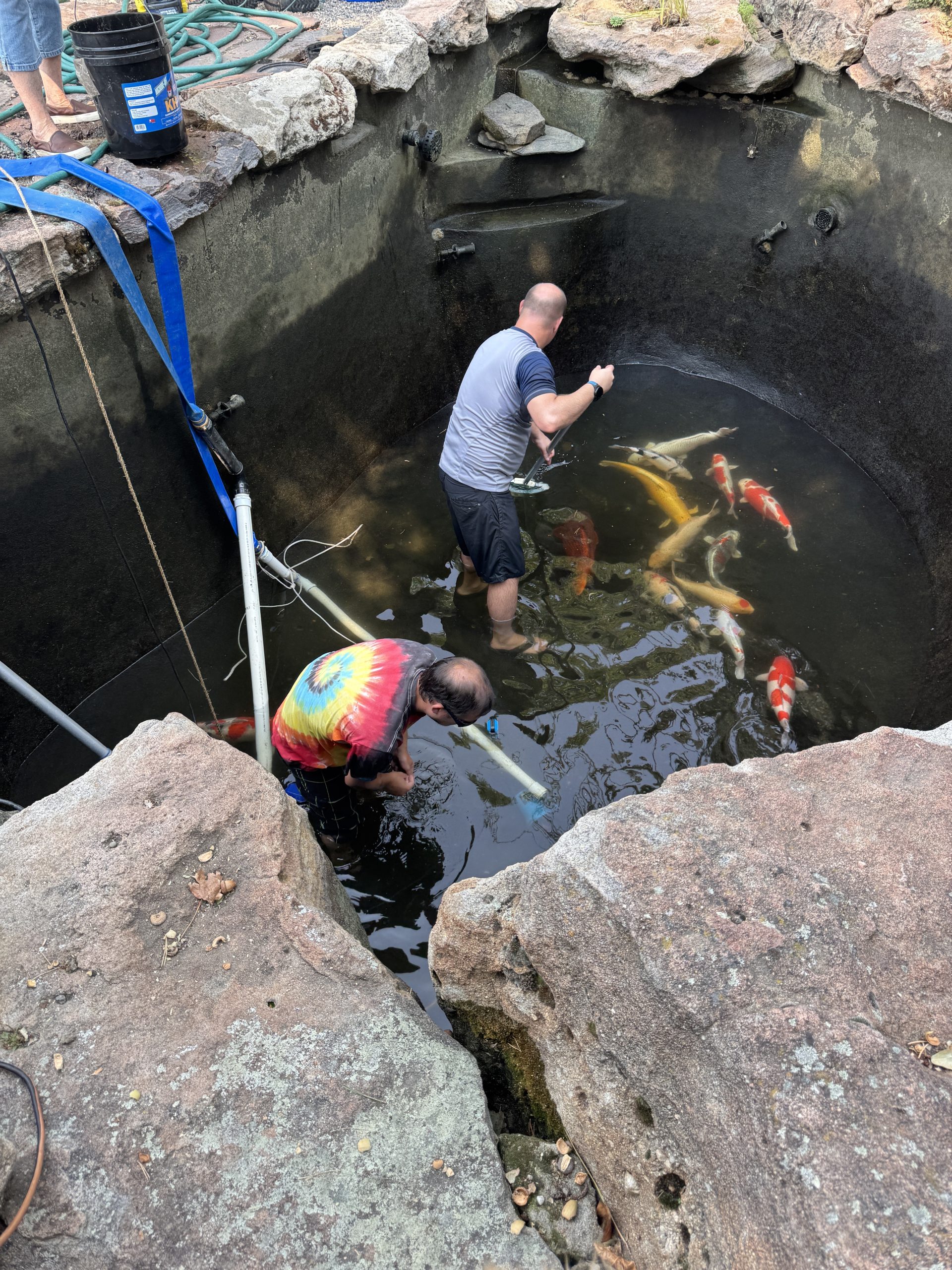
Hopefully, you do the partial water changes during the summer season. It is also recommended to do them during the off seasons, spring, fall and winter. Nobody expects us to do it quite as often as in the summer when we are feeding the fish. But for the health of our fish, occasional (monthly) partial water changes would be good for them. BUT… do not do large water changes, do not forget the water conditioner (chlorine remover), and you never want to change so much of the water as to either warm it or make it colder than it is, by adding new water. We never want more than 2-5 degrees difference in the water. I would never run the hose at full strength. Best to let it trickle into the pond.
Another rule: NO SWIMMING in winter! That’s just my way of saying, Be Careful out there! It could be just so easy to fall into one’s pond. I like to put Flower Pots or other decorations at the borders of my pond, if we get a heavy snow, so that nobody accidentally over-steps the bounds. When koi are in torpor, they are not hibernating. They are using the least amount of energy possible, but still able to escape danger. Torpor is a state of semi-dormancy that koi enter during colder months, characterized by reduced activity and slowed metabolism. They do not need fuel (food). It can take a koi a long time to recover from the stress of a sudden fright while in torpor, with the initial reaction being very slow and generally lasting even hours. While they are resilient and usually recover quickly once stress is removed, their response to being startled is sluggish at this time, so it is best to provide a gentle current of water and wait for them to slowly regain their ability to swim. SOOO, if you fell in, you would be harming your koi as well as yourself!