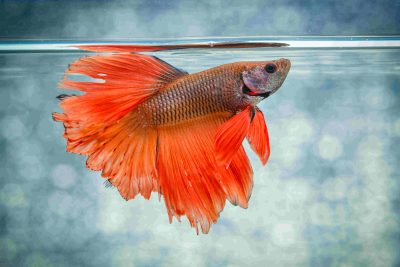
Every once in a while, I succumb to the gorgeous Beta. I bring it home and promise I will be successful this time. I put him into a round bowl, no filter, just a little colorful gravel in the bottom of the bowl. Once a day I will feed him. And, once a day I do a water change. It sounds fairly simple, right?
The problem is that I had never factored in the amount he needs to eat… which is only one pellet… per day. So, some days, I overfed him. And he died. The next problem I didn’t consider was the water. It’s chlorinated. He doesn’t live in chlorinated water and can’t adapt to chlorine without my help. I need to dechlorinate the little bowl before adding my beautiful Beta. And, I have to feed him balanced, high protein foods to keep him healthy. It’s starting to sound kind of complicated now.
I set up an aquarium, 20-gallons. I added only one beautiful Beta. The tank looked very empty. I added some neon tetra. Then, I added some Angelfish. Oh, what the heck, I added Java fern and a bunch of other aquarium plants, too. My Beta sort of got lost in the tank. I put a mirror up against the side of the tank! That was genius! He was showing off in front of the mirror. This was the best idea I had had.
I thought he should have a female friend. I bought three female Betas. He should love this! His own Harem. Females, of course, are nothing to look at. No particular color and no big, flaring fins. I kept the temperature of the tank at 72˚-75˚F. Six months later, my Beta was dead. What the heck?? All this was for that one fish. I learned they like temperatures at 78˚-80˚F and with so many fish in the tank, I’m not sure he was getting the food he needed.
I started again, in a 5-gallon filtered tank with my mother’s philodendron “root-end” in the tank and the rest of it growing around the room. I put a mirror on the side of the tank to keep him company. I kept the tank clean, added no tank-mates, and enjoyed my beautiful friend. Two years later, he died…? I learned another lesson. They don’t live forever. They are probably one year old when we get them and have a life span of 3-5 years in captivity.
Now, I enjoy my Betas for as long as they live and when they are gone, I replace them. In fact, I am a Beta-expert now and have a row of 5-gallon tanks successfully housing beautiful Betas!