If you try to get every single mouth filled, the answer is simply “wrong”. The larger and older a koi grows, the less food it needs to thrive. It is the young fish, babies, that need nutrients and minerals to grow. They are the ones that will fight for the food. However, they are also the ones that will find a lot of what they need within the pond.
Think about fish in the wild. Who feeds them every day? What do they eat? Right! They eat bugs. Koi are not carnivorous and will not eat the juveniles in the pond once they can recognize them as fish. When spawning, the parent fish will not be interested in feeding. They’re feeding on the eggs at that time.
A mature female koi (3 years or over) can lay a massive number of eggs in a single spawning season, which is once a year in spring, typically ranging from 100,000 to over 500,000 eggs per female. The number of eggs produced is directly related to the female’s size, age, and health, with estimates often suggesting 50,000 to 100,000 eggs per pound/kilogram of body weight. The eggs the parents eat make nutritious additions to their intake. Nature knows what she is doing.
Out of 10,000 hatched koi, only around 1,500 grow to have good quality in terms of size.
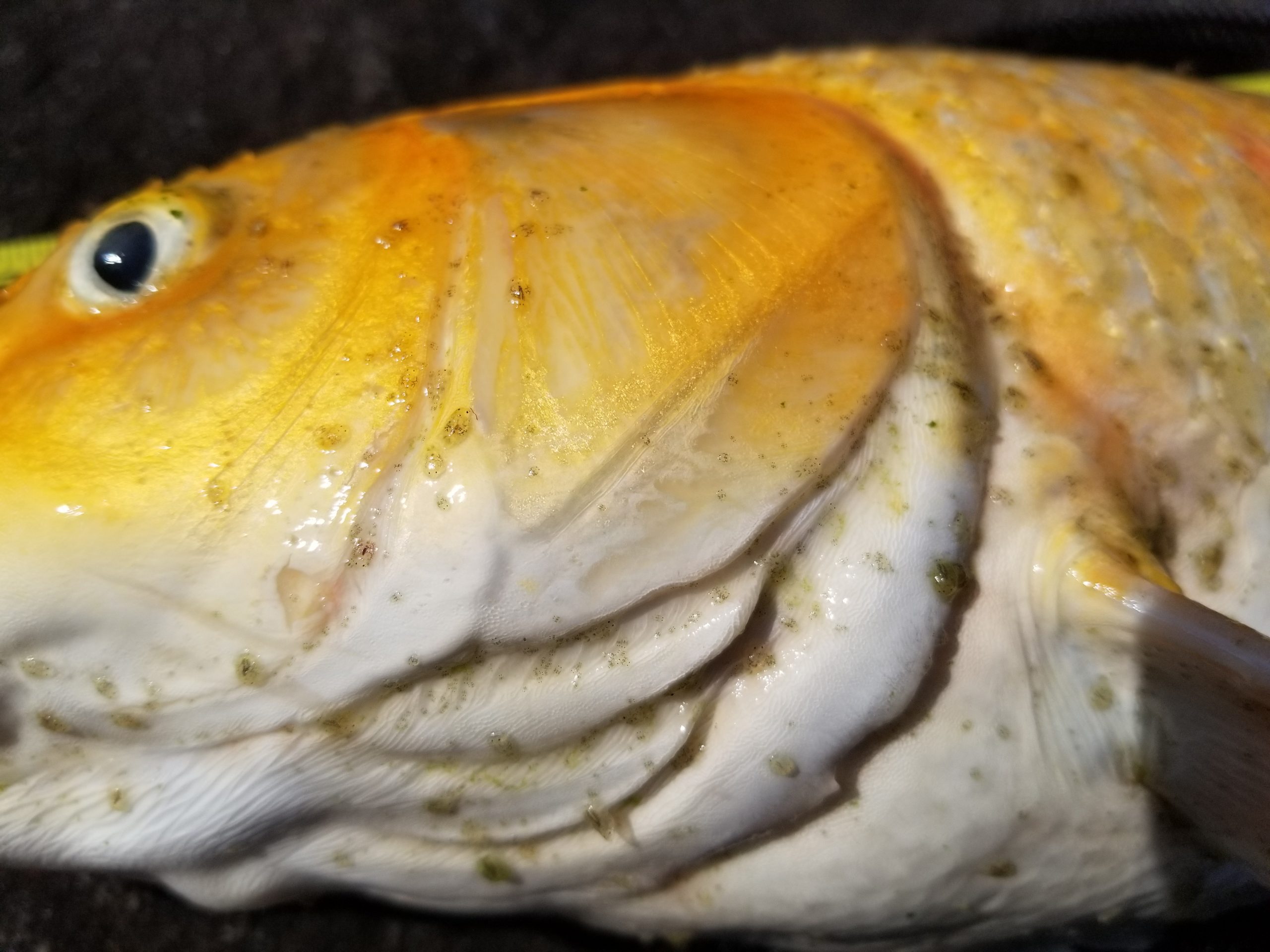
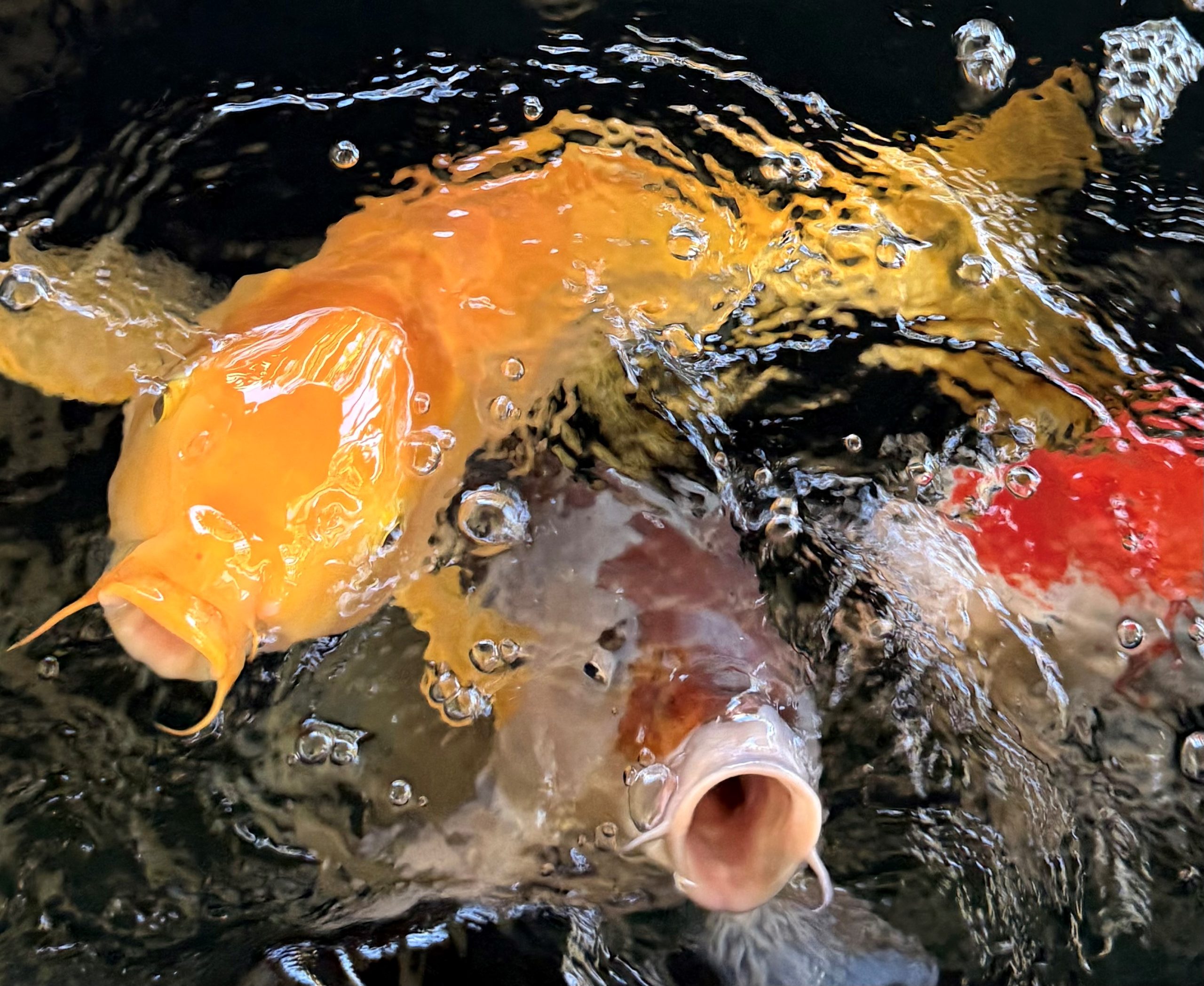
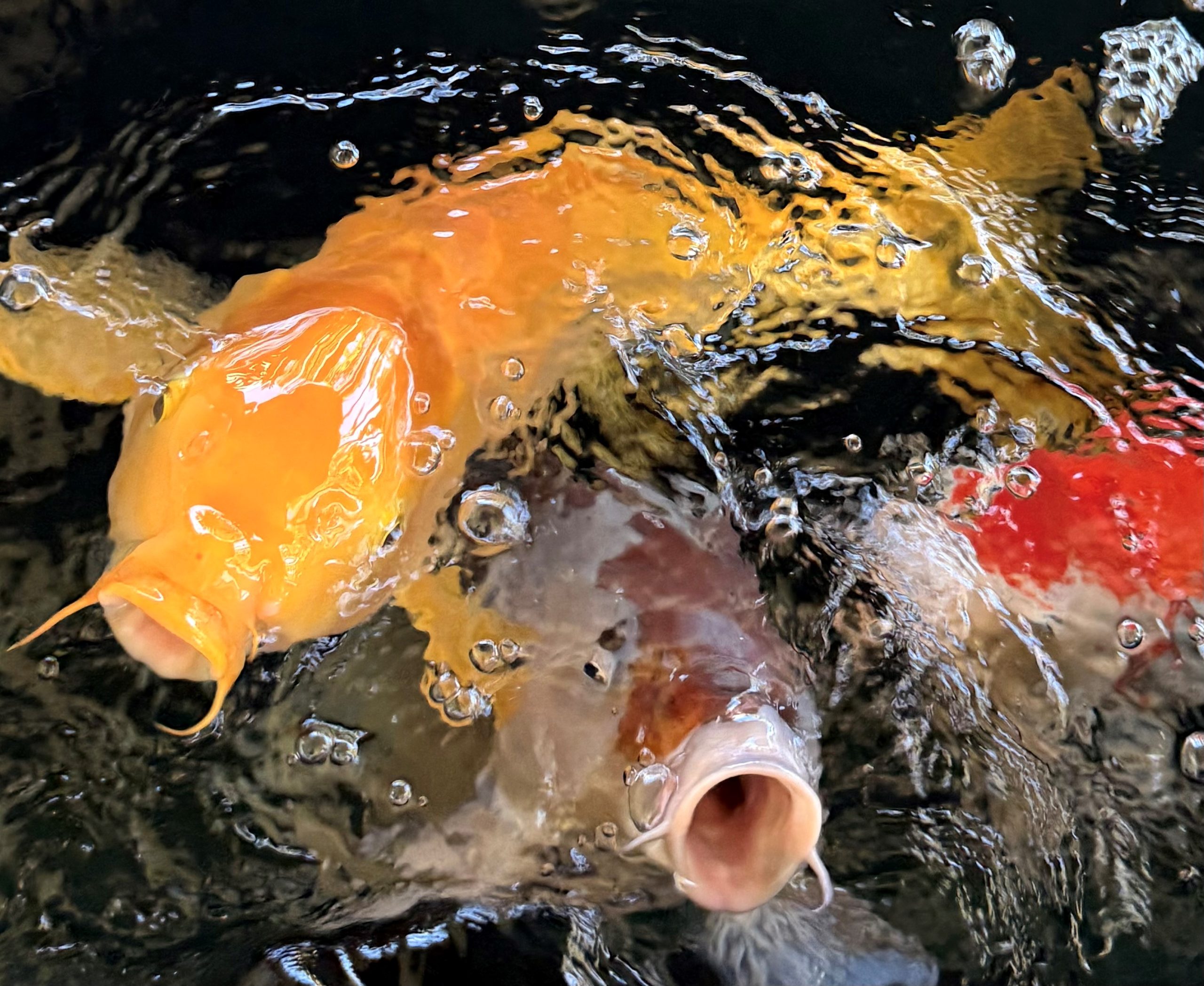
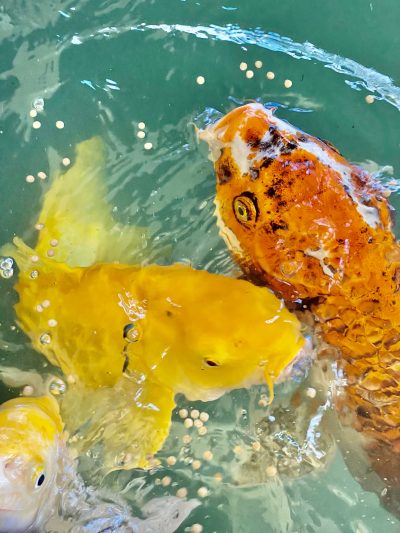
Once these koi are in your pond, self-sufficient and pushing their way into the crowd of fish for their share of food, if they do not eat at every meal, they will not die. When koi eat, they grab a pellet or a mouthful of pellets and sink down into the pond to “chew” it. When done, they will come back to the surface. Koi have pharyngeal teeth at the back of their throats, enabling them to eat large or small pellets, beetles, or other insects in the pond.
Koi have no stomach. They have one long gut that carries their food from the mouth to the anal exit. If you overfeed the fish, the food will not spend enough time inside the fish for them to extract nutrients. The food is on a “conveyor belt” and the more food, the faster it exits. Basically, you are feeding the pond.
Koi fish are grazers. Like cattle, they do not eat to fill their stomachs. They eat a little food all day. If you feed the fish a small amount several times daily, they will have time to uptake the minerals and nutrients the food offers. Please don’t over-feed your fish. Remember, give them room in the pond to exercise and just enough food to actually benefit.