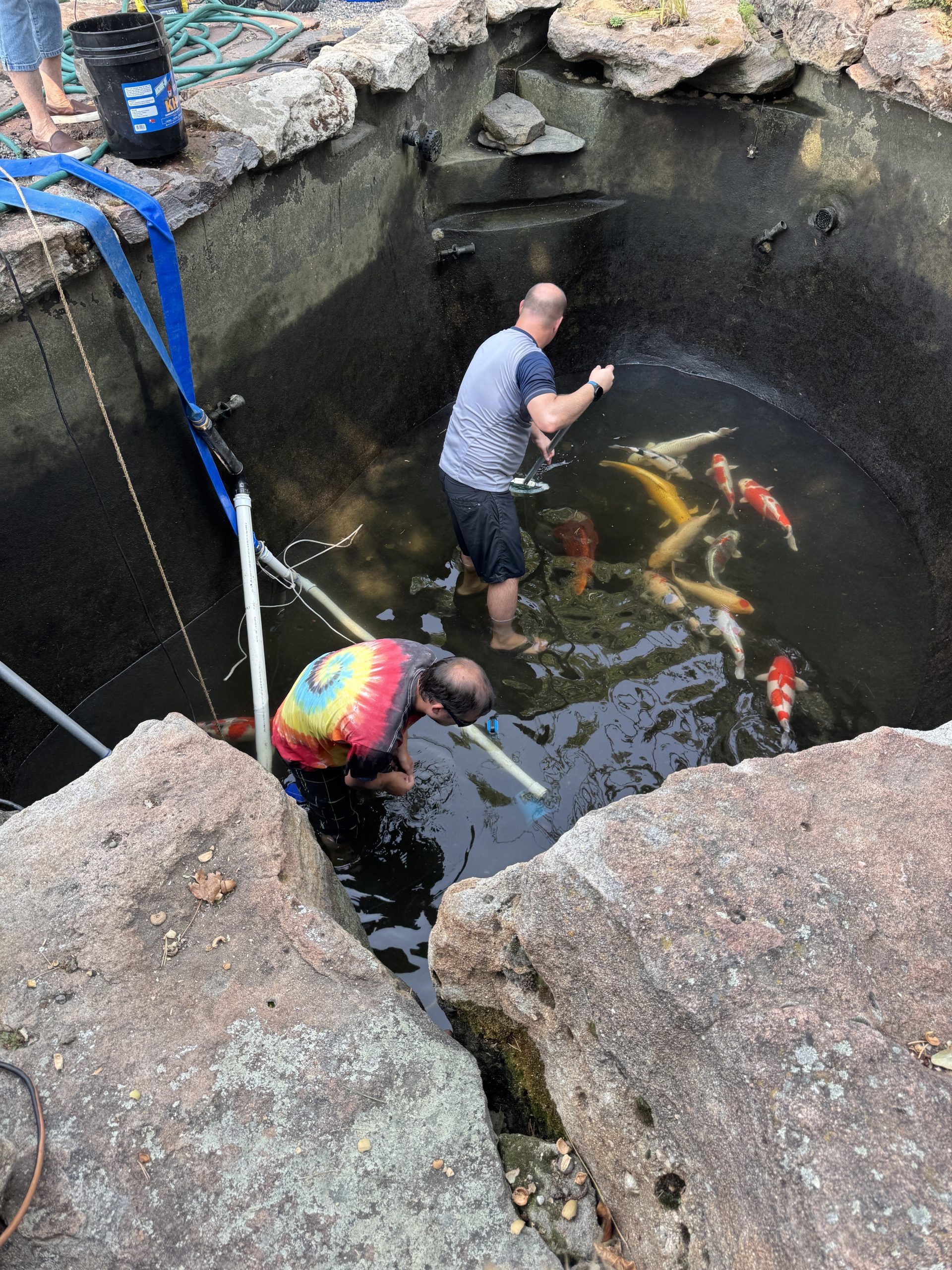
Leaving your pond and koi in the summer generally means you will have someone else watch the pond while you are gone. Even though you leave instructions, the fish-sitter rarely can be trusted to do what you say. I always advise to hide the fish food in a place they won’t be able to find. You know how your koi come to the side of the pond, mouths open, looking like they “must be starving”? Well, the sitter won’t backwash the filter and do the necessary water changes after they over-feed your koi. Trust me, they will over-feed. They mean well, but it happens. If you take a 4-5-day cruise, the fish will probably just make a mess of the pond and you will come home in time to rescue your water quality. But, longer than that, it may be a disaster.
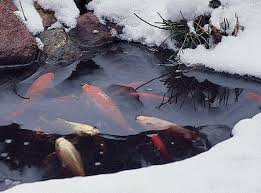
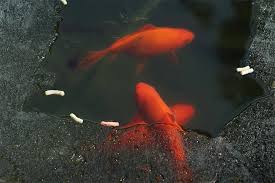
Now, in the middle of winter in a northern climate, you can expect the fish to be in torpor if the water temperature is low enough or if it’s cold enough to have an ice covering on the pond. But, there is still evaporation. So, water will probably need to be added. At the very least, the pond should be checked to make sure it has not sprung a leak. Your sitter needs to know where the De-chlorinator can be found. Summer or winter, Microbe-Lift/Aqua Xtreme is the best choice to use because it removes chlorine and chloramines, if you’re on city water.
The next issue for the sitter to be on guard is cold water temperature. Should your temperature drop to a low that is not safe for your fish, something has to be done. Or should your De-Icer stop working, the sitter would have to step in with another one, quickly, before you start losing fish. Leave the sitter a place or friend he can contact easily for a replacement. The other option would be to bring your fish indoors until something can be done (when you come back) … Koi can withstand water temperatures from 40˚-90˚F, and will tolerate cold as low as 34˚ or 35˚ for a short time before they begin to die. Erecting wind breakers around the pond can be helpful, too.
Remember, the deeper the pond, the more stable the water temperatures. The shallower the pond, the more dangerous the cold is for your fish (without protection). And, they cannot produce heat to warm themselves.